
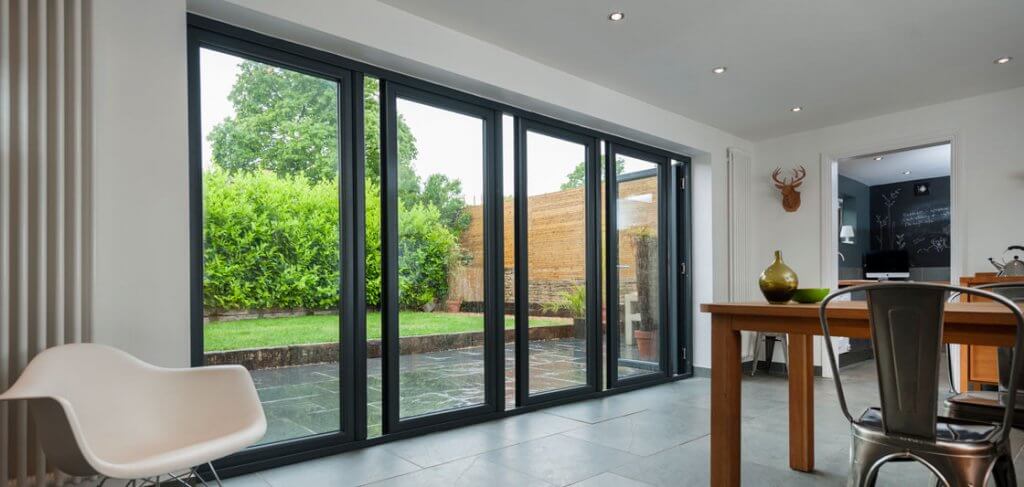
If you want the short answer: bifold doors suit wide openings where you want the entire wall to open up; sliding doors are better for slim sightlines and minimal frame intrusion; French doors work well for smaller openings or period properties on a tighter budget.
Read on for the detail behind that decision.
Which door type opens up the most space?
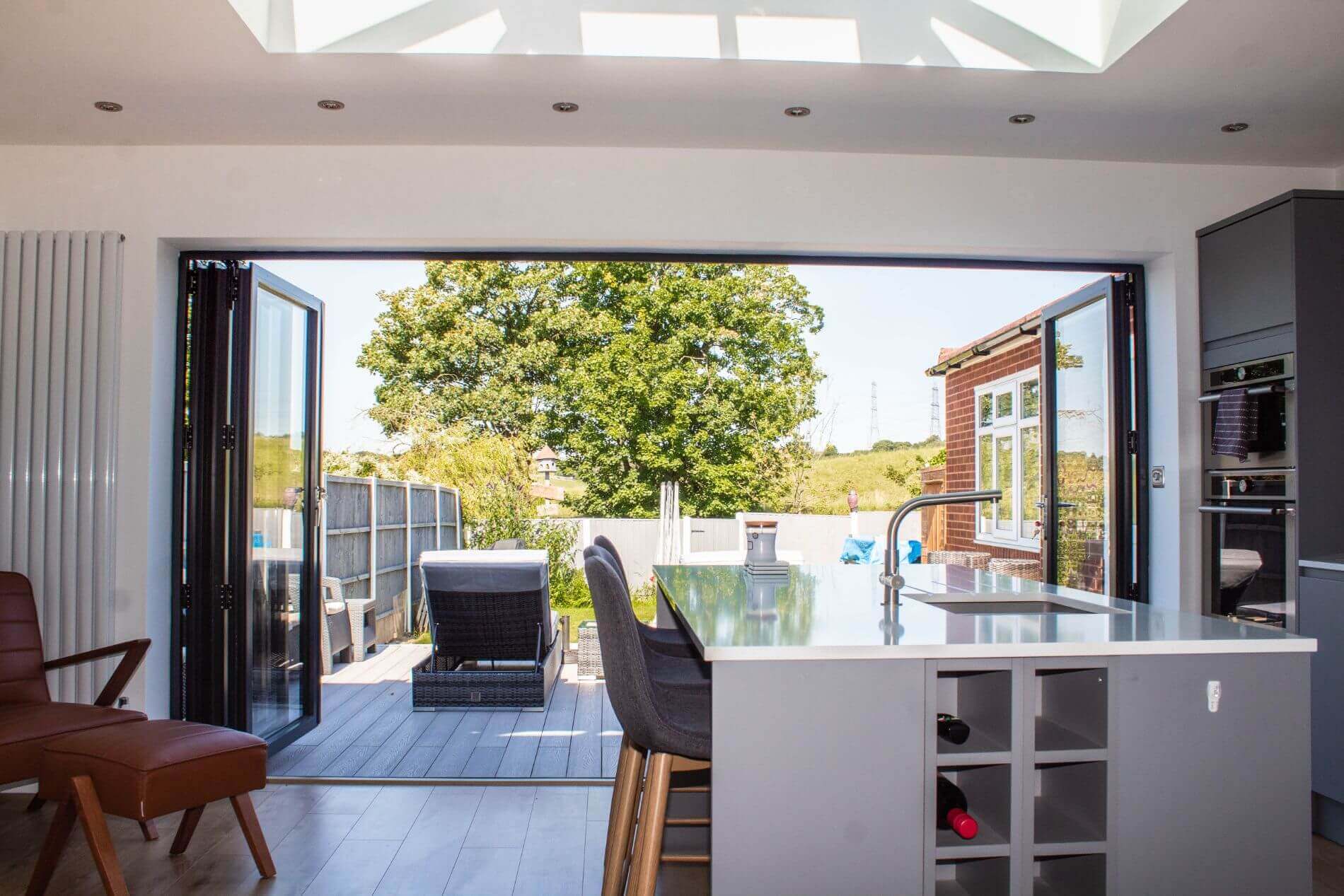
Bifold doors use a folding mechanism that stacks panels to one or both sides. On a 4-metre opening you can typically get four to six panes of glass, with up to 90% of the frame area becoming a clear opening. That makes them the go-to choice when you want a seamless transition between your living space and outdoor areas.
Sliding doors run on a track system. One or more glass panels slide behind a fixed panel. The opening is roughly 50% of the total frame width on a two-panel configuration, though multi-panel sliding door systems can open further. The major advantage is the slim sightlines, which means more glass area and uninterrupted views even when the doors are closed.
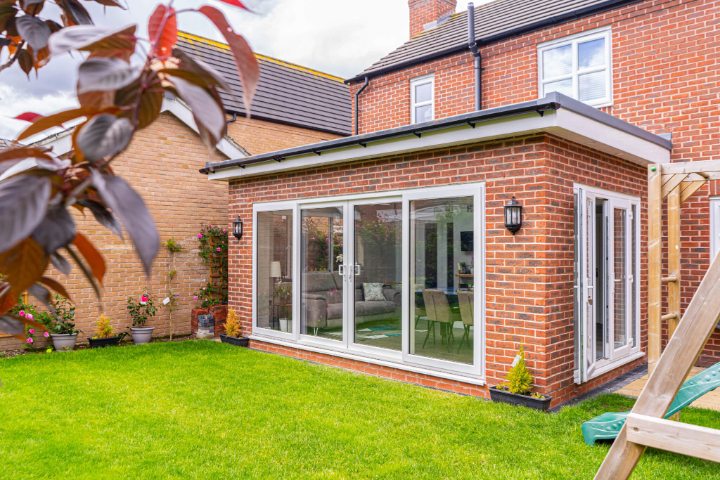
French doors are the most straightforward option. Two large glass panels open outward (or inward). The opening width is limited to the door frame itself, usually 1.2 to 1.8 metres. They are a popular choice for smaller extensions, side returns, or anywhere that an abundance of natural light is the priority but floor space is tight.
Cost comparison: What drives the price?
Prices vary based on size, material, glazing spec and the structural work needed. The table below gives typical installed costs for a standard 3-metre opening in the West Midlands.
| Door type | Entry-level installed | Mid-range installed | Premium installed |
| French doors | £1,800 – £2,500 | £2,500 – £4,000 | £4,000+ |
| Sliding doors | £2,500 – £4,000 | £4,000 – £6,500 | £6,500+ |
| Bifold doors | £3,000 – £5,000 | £5,000 – £8,000 | £8,000+ |
Figures are indicative for uPVC or aluminium with double glazing. Wider openings, triple glazing, or structural steelwork will push costs higher.
Key cost drivers to understand before you quote:
- Number of panels – each extra panel adds manufacturing and installation cost
- Material – aluminium costs more than uPVC upfront but offers slimmer door frames and longer service life
- Glazing spec – upgrading from double to triple glazing adds 15-25% to the glass cost but improves thermal efficiency
- Structural steelwork – if you are removing a load-bearing wall for a wide opening, a steel beam is often required under building regulations. Budget £800 to £2,500 depending on span
Thermal performance and heat loss
This is where many homeowners make an expensive mistake. A large glass area will always lose more heat than a solid wall. The question is how much, and whether the design compensates for it.
U-values to look for:
- A-rated double glazing: around 1.2 W/m²K
- Triple glazing: around 0.6-0.8 W/m²K
- Part L of the Building Regulations currently requires door systems to achieve no worse than 1.4 W/m²K for replacement doors in England
Bifold doors with slim aluminium frames and a thermally broken profile perform well. Sliding doors often have fewer frame joints, which can reduce cold bridging. French doors, due to their smaller glass area, naturally limit heat loss by default.
In summer months, all three types benefit from good shading or solar control glass to prevent overheating. Low-E coatings on glass panes can reduce solar gain without noticeably affecting the view or natural light levels.
Ventilation, security, and ease of use
Ventilation – bifold doors provide the widest fresh air opening with minimal effort. Sliding doors offer a large ventilation gap but cannot fully open the space. French doors open fully but the opening width is limited.
Most sliding and bifold door configurations include a traffic door – a single leaf that can be opened independently for everyday access without moving the full door system.
Security features to look for across all three types include multi-point locking, toughened or laminated glass panes, and anti-lift brackets on sliding track systems. Security concerns are often raised with bifold doors due to the number of panels, but modern systems with shoot-bolt locking perform well.
Decision table: Which door suits your project?
| Situation | Best option |
| Wide opening, maximum access | Bifold doors |
| Slim sightlines, large glass area | Sliding doors |
| Smaller opening or period property | French doors |
| Budget priority | French doors |
| Step-free threshold needed | Sliding doors |
| Modern home, visual impact | Bifold or sliding |
Getting the right advice for your extension
Choosing the right doors is an important decision—but it’s only one part of a much bigger picture when planning a home extension or renovation. From structural considerations to thermal performance and building regulations, every detail plays a role in the success of your project.
With years of experience fitting door systems across the West Midlands, the team at West Midlands Home Improvements can guide you through the options. We’ll help you choose door configurations that suit your opening size, wall build-up, and budget—whether you’re comparing bifold doors with the thermal efficiency of sliding systems or simply want to make a well-informed decision.
More importantly, we don’t just advise on doors. We support you through every stage of your project from design through to ensuring all regulations are met, giving you complete peace of mind.
A site visit can make all the difference, offering clear, practical guidance and a straightforward path to getting your project off the ground.
Get started today:
Complete our Site Consultation Form or call 0121 726 6730 to discuss your extension and door options.
 Finance Options