
Picking the right heating for a house extension early in the build saves money, avoids rework and keeps your energy bills under control long term.
The three most common options are underfloor heating, traditional radiators and heat pumps. Each suits different layouts, budgets and insulation standards.
Here is a straightforward comparison to help you choose before the concrete goes down.
Which heating system is actually best for a new extension?
There is no single answer, but there is usually a clear front-runner once you factor in your floor finish, ceiling height, how the extension connects to the rest of the house and your existing central heating system.
A quick comparison at a glance:
| System | Avg install cost | Warm-up time | Best for | Energy efficiency |
| Wet underfloor heating | £50-£100/m² | 30-60 mins | Open-plan, tiled floors | High |
| Electric underfloor heating | £20-£50/m² | 10-20 mins | Small areas, retrofits | Medium |
| Radiators | £300-£600 fitted | 10-15 mins | Quick heat, any room | Medium |
| Air source heat pump | £7,000-£13,000 | Steady output | Whole-home or extension | Very high |
Underfloor heating in a house extension
Underfloor heating is the most popular choice for new extensions, and it is easy to see why. Because the heat rises evenly from the entire room floor upward, you get a consistent level of comfort without cold spots near windows or external walls.
Wet systems use warm water pumped through pipes set into the screed. They run at lower flow temperatures than radiators, which makes them ideal if you are planning to connect a heat pump later. Electric mat systems are simpler to install and better suited to smaller living spaces or areas where digging up a floor is not practical.
Key things to consider with underfloor heating
- Floor finish matters. Stone and porcelain tiles conduct heat well. Thick carpet acts as an insulator and reduces output significantly.
- Screed depth adds height. A wet system typically adds 80-150mm to floor level, which affects door frames, step heights and where the extension meets the existing home.
- Manifold location. The manifold (the control unit for a wet system) needs to sit somewhere accessible, usually in a cupboard within or near the extension.
- Warm-up time. Wet underfloor systems take longer to reach temperature than radiators, so good thermostat placement and programmable controls are important. Zoning the extension separately from the rest of the house gives you precise temperature control and avoids heating rooms you are not using.
- Proper insulation beneath the pipes is non-negotiable. Without adequate thermal insulation under the screed, a large portion of the heat goes downward rather than upward. Building regulations require insulation levels that support this, but go beyond minimum standards if you want maximum efficiency.
Radiators in a house extension
Radiators remain a practical and cost-effective solution, particularly when the extension is a single room connected directly to your existing central heating system.
The main advantages are speed and simplicity. A radiator heats an entire room within 10-15 minutes and installation is straightforward for any qualified heating engineer. Running new pipework through an extension is far less disruptive than laying underfloor heating pipes in screed.
For large spaces with high ceilings, radiators may actually outperform underfloor heating in terms of warm-up time. The downside is that they take up wall space, can create uneven heat distribution in open-plan layouts and run at higher water temperatures, meaning they are less compatible with heat pumps running at lower flow temperatures.
If your existing central heating system is a standard gas boiler and you have no plans to switch to renewable energy sources, radiators offer the lowest initial cost and the quickest path to a warm room.
Heat pumps for house extensions
An air source heat pump extracts warmth from outside air and transfers it inside. Running costs are lower than gas in most scenarios, and the system qualifies for the UK government’s Boiler Upgrade Scheme grant (currently £7,500 off the cost).
Heat pumps work best when:
- The extension has excellent thermal insulation and double or triple glazing
- You are using underfloor heating or large low-temperature radiators
- You want to reduce energy consumption across the entire home, not just the extension
The higher installation costs are offset over time through lower energy bills. For homeowners building a well-insulated extension who are thinking about long-run energy costs, a heat pump paired with wet underfloor heating is the most energy-efficient combination available.
The technical support team at West Midlands Home Improvements can advise on which system works with your planned build before any groundwork starts.
How insulation and glazing affect your heating choice
The better your insulation, the smaller and cheaper your heating system needs to be. An extension with poor thermal insulation will struggle regardless of which system you install. Building regulations set minimum standards, but exceeding them pays back through lower energy bills year after year.
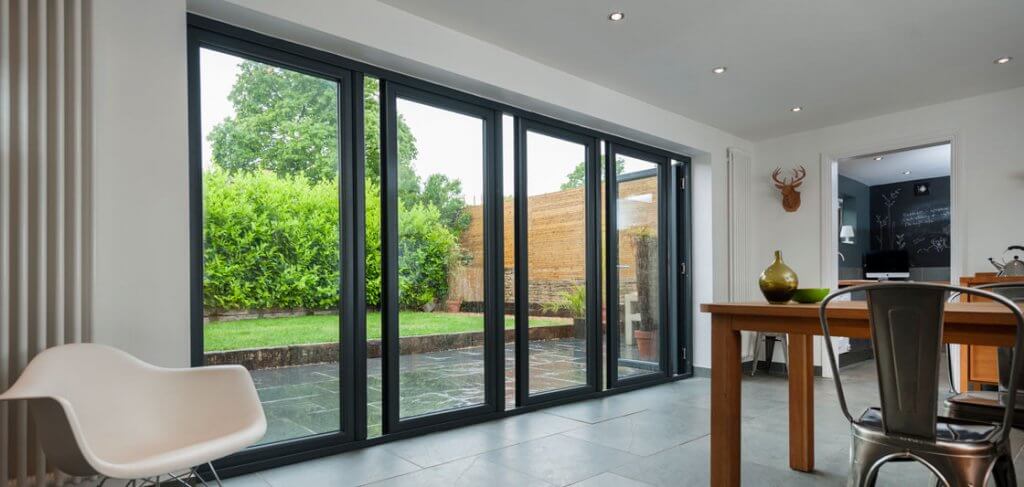
Roof insulation, cavity wall insulation and the U-value of your glazing all reduce heat loss. A high-performance roof lantern or bifold door system with good thermal ratings lets you keep large glazed areas without losing all the heat you are putting in.
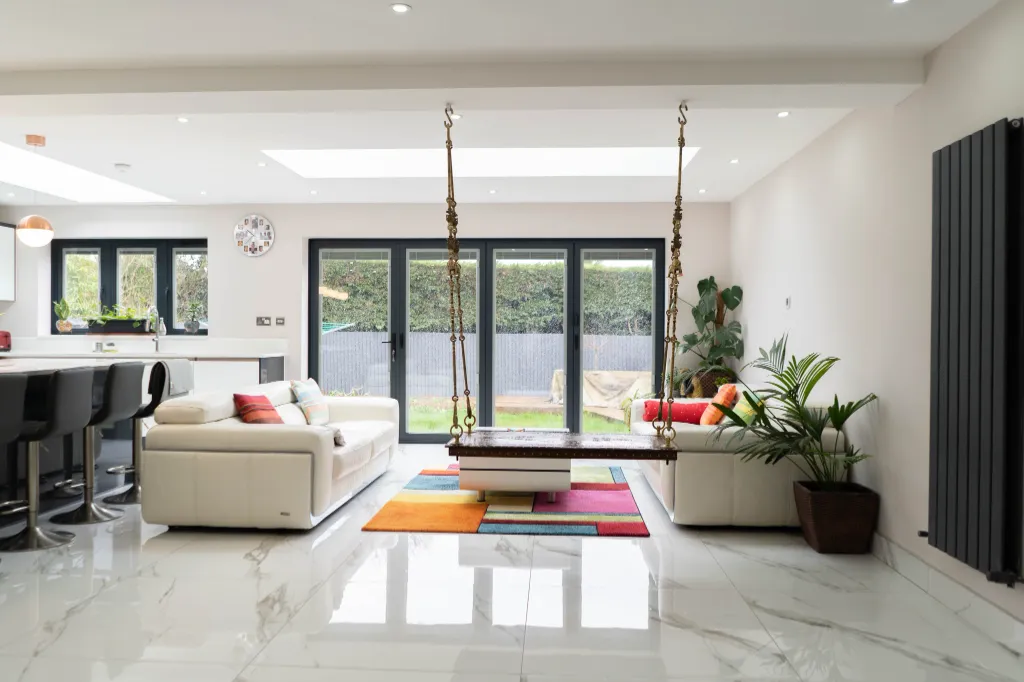
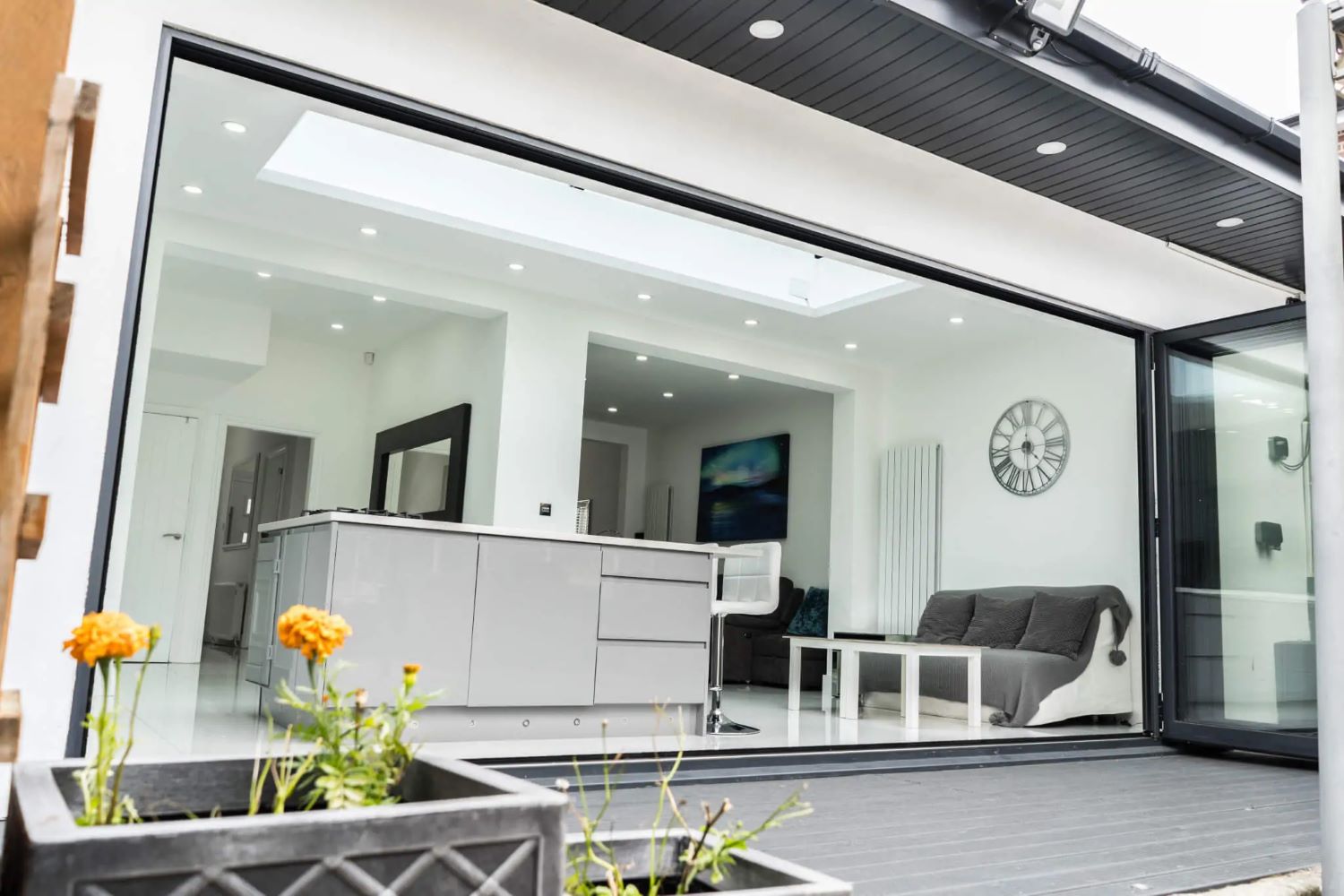
Open-plan extensions connecting to a kitchen or living room create larger living spaces where underfloor heating performs particularly well because there are no radiators interrupting the wall space or restricting furniture placement.

Which system should you choose?
- Choose underfloor heating if you want consistent warmth, plan to use tiles or stone flooring, and have the floor depth to accommodate it.
- Choose radiators if you need a fast, low-cost solution that connects to your existing system with minimal disruption.
- Choose a heat pump if you are investing in a high-performance extension and want the lowest long-term energy costs, especially if you are also planning to upgrade the rest of the house.
Next Steps to get your House Extension Project Started
Choosing the right heating system for your extension is a key decision—but as this guide highlights, it’s closely linked to other factors such as insulation, floor build-up, glazing and how the new space connects to your existing home. Getting these elements aligned from the outset is what ensures your extension is comfortable, efficient and cost-effective to run long term.
At West Midlands Home Improvements, we look at the bigger picture. From initial design and heating system selection through to insulation standards and full regulatory compliance, we help you plan your project properly before any groundwork begins—avoiding costly changes later.
If you’re planning a house extension and want clear, expert guidance on the best approach for your home, speak to our team today. We’ll help you understand your options and map out a practical, well-informed plan.
Get started today:
Complete our Consultation Form or call 0121 726 6730 to arrange your site consultation.
 Finance Options