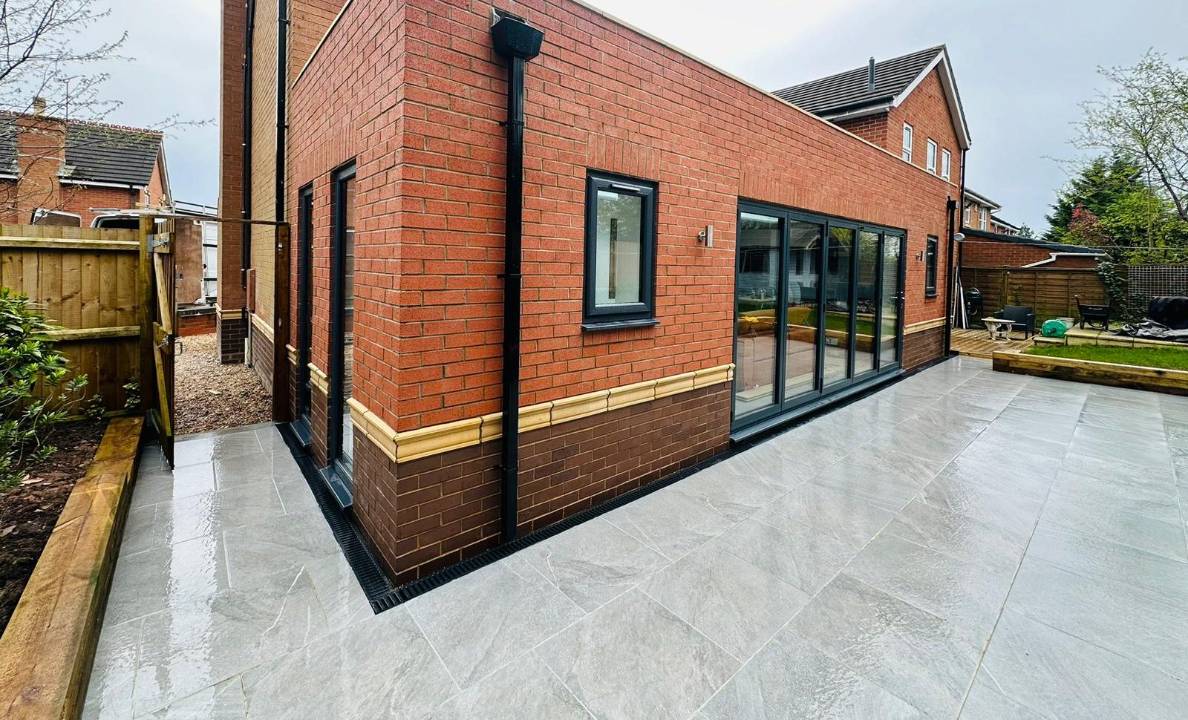
A side return extension fills the narrow strip of unused land running along the side of a terraced or semi-detached house. For most Victorian and Edwardian homes across Birmingham and the West Midlands, that forgotten alleyway is the single biggest untapped space on the plot.
Build into it and you can widen a cramped kitchen by up to two metres, create a full-width kitchen-diner, tuck in a utility room or WC, and flood the heart of the house with natural light.
What is a side return extension?
The side return is the strip of land that sits to the side and rear of most terraced and semi-detached properties. It is usually the same width as a narrow alleyway – typically one to two metres – and runs from the back corner of the main house to the rear boundary. Because it sits in shade and offers no usable outdoor space, it is one of the most consistently wasted areas of the British home.
A side return extension infills this gap, squaring off the footprint of the property and increasing the internal width of whichever room sits alongside it – almost always the kitchen. The floor area added may be relatively modest in isolation, but the transformation to the proportions and feel of that room is disproportionately large.
Who benefits most from a side return extension?
This type of project is almost exclusively suited to terraced and semi-detached homes. Detached properties rarely have a side return in the same sense – they typically have full-width side access instead.
If your home is a Victorian or Edwardian terrace in areas such as Harborne, Moseley, Bournville, Erdington, Handsworth or any of Birmingham’s older residential suburbs, the chances are high that a side return extension is viable.
The classic scenario is a narrow kitchen at the back of the house, positioned in the outrigger – the single-storey rear projection common to thousands of West Midlands terraces. Widening this kitchen, even by 1.2 metres, changes everything: the layout, the light, the sense of space, and the way the whole ground floor connects.
How much does a side return extension cost in the West Midlands?
Cost is the first question most homeowners ask, and rightly so. The honest answer is that no two projects are identical. A useful benchmark is £1,800 to £2,800 per square metre for a West Midlands single-storey side return extension, though heavily glazed or design-led builds can push higher.
Side return extension layout ideas
The layout options available to you depend on three things: the length of your outrigger, whether the existing floor is level from front to back, and the overall width of your plot. With those known, the possibilities open up significantly.
Wider kitchen-diner with central island
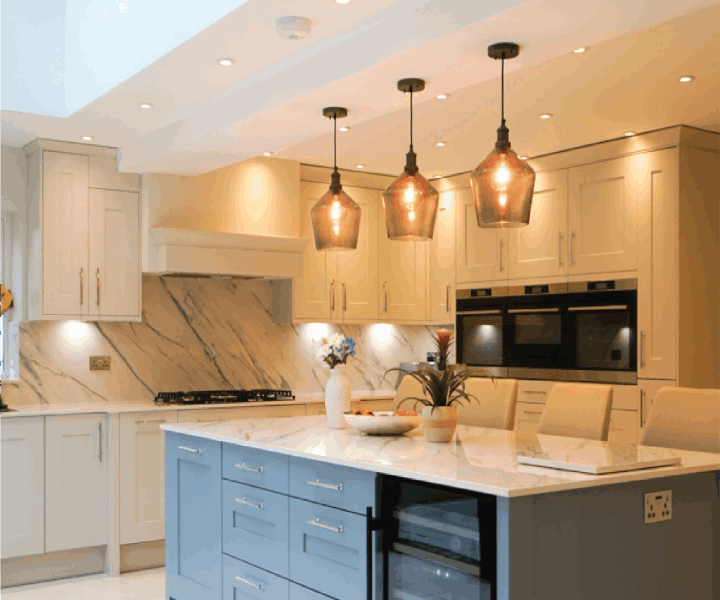
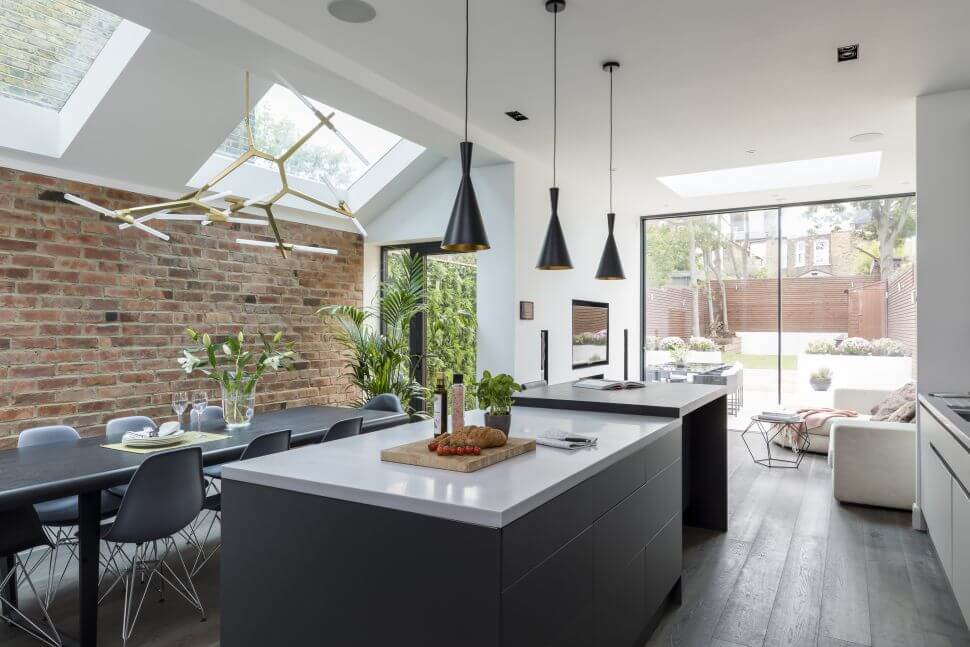
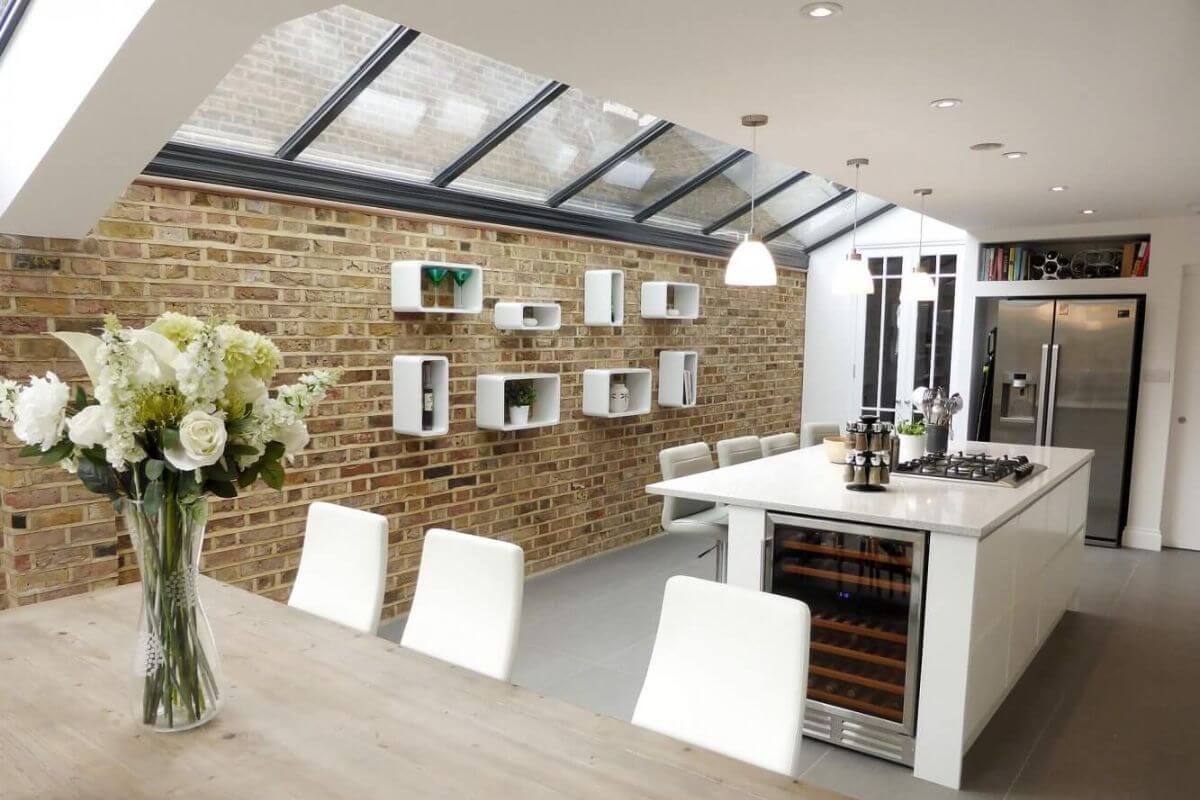
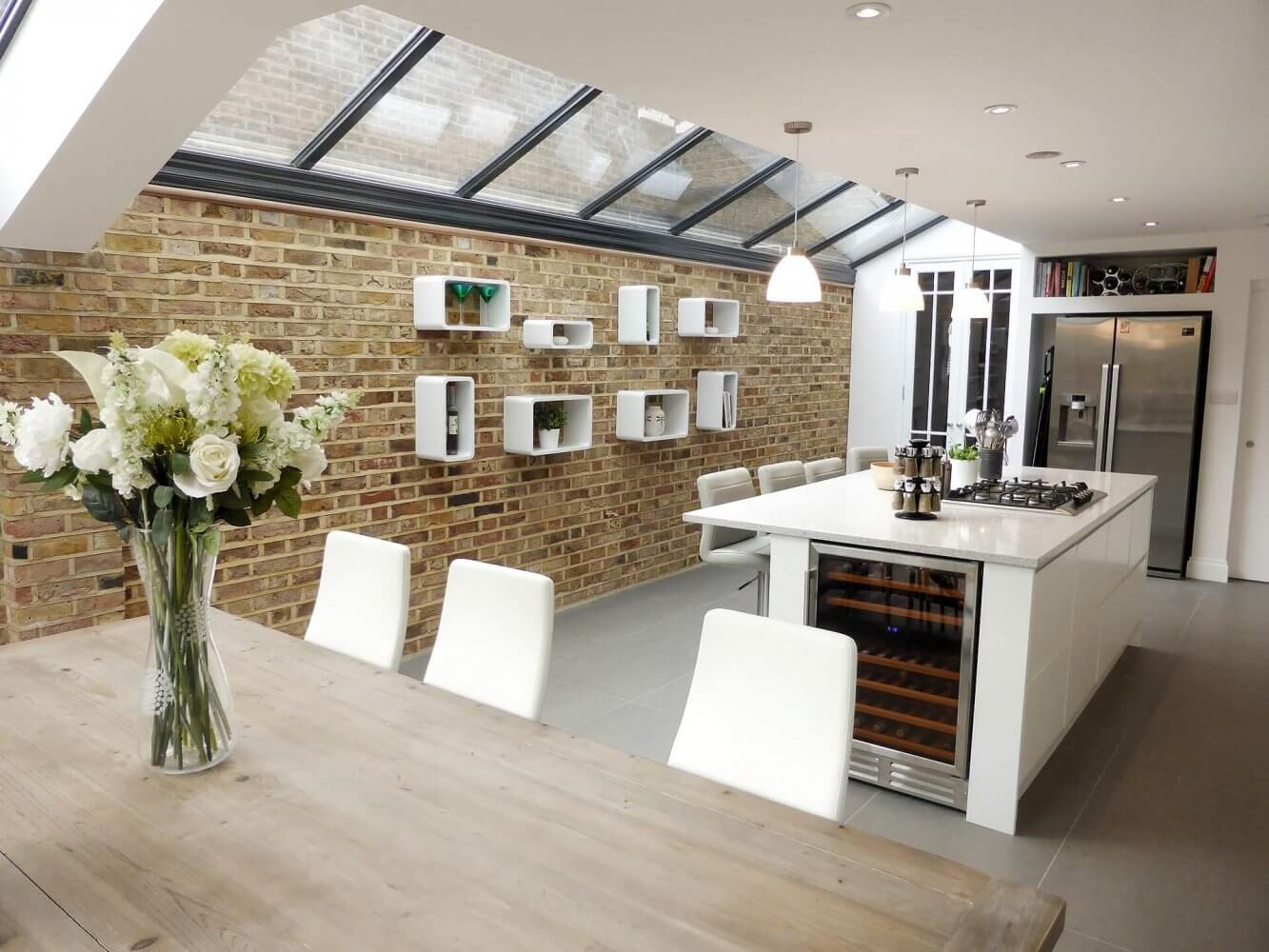
This is the most popular configuration across the West Midlands. The new extension adds width to the existing kitchen, which is then completely redesigned as a kitchen-diner. A run of units sits along the party wall, a central island with bar seating occupies the middle zone, and the dining table sits within the new extension footprint, positioned close to the garden-facing doors. The result is a proper sociable space where cooking, eating and everyday family life all happen in one connected area.
Utility room and WC in the extension
Not every homeowner wants open-plan living. For those who prefer to keep the kitchen and dining spaces separate, the extension footprint can instead house a utility room, a downstairs WC, or both. This layout reclaims the existing kitchen as a dedicated cooking space without the noise and mess of laundry spilling into a family dining area.
The utility/WC layout works particularly well when the outrigger is short – say, three to four metres – because a full kitchen-dining reconfiguration may not be practical. Tucking a utility behind a door and adding a small cloakroom delivers everyday practicality that many families rate higher than they expected when they first set out to plan.
Pantry and kitchen storage zone
A narrower side return – anything under 1.2 metres – may not comfortably accommodate a dining area or utility room, but it can provide a dedicated pantry and storage run. Floor-to-ceiling larder units, a wine fridge, a second fridge-freezer or a built-in coffee station can all sit along the new external wall, freeing the main kitchen of the clutter that typically accumulates in an undersized space.
Dining and seating area in the extension
Positioning the dining table within the side return itself – rather than in the main kitchen – uses the new footprint as a distinct zone. The table sits beneath rooflights or a glazed roof panel, with garden-facing doors on the rear elevation. In a north-facing configuration, the generous glazing allows good levels of diffused light without the overheating risk associated with large south-facing glass areas.
Key constraints to understand before you start
Drainage and buried services
This is the single most common costly surprise in side return projects. Victorian and Edwardian houses across Birmingham and the wider West Midlands were built with drainage systems that ran straight across the side return – often in clay pipe with no records of precise positions.
If a manhole, drain run or public sewer crosses your proposed extension footprint, you have three options: divert the drain (expensive), build over it under a build over agreement with Severn Trent (possible but adds time), or redesign the extension to avoid the obstruction. A CCTV drainage survey before design is finalised costs around £200 to £500 and can save thousands.
Building over or within three metres of a public sewer may require a build-over agreement from the relevant water authority. Getting this confirmed early means it can be designed in rather than retrofitted at the last moment.
Boundary walls
The existing boundary wall between your side return and your neighbour’s property is often old, poorly built and inadequate to form part of a new extension. In many cases it cannot be used as a structural element at all.
Options include retaining the boundary wall as a non-structural screen and building a new inner skin, or demolishing and rebuilding the boundary entirely as part of the extension wall. The latter approach resolves the structural question cleanly but requires a confirmed party wall agreement first.
In conservation areas, boundary wall heights are often limited to around two metres from ground level. This can constrain the ceiling height inside the extension and may require lowering the floor level to gain adequate headroom – which in turn may mean underpinning existing foundations. This adds time and cost and should be identified at the feasibility stage.
The Party Wall Act
A side return extension almost always triggers the Party Wall etc. Act 1996, which governs work affecting shared walls or boundaries between neighbouring properties. Neighbours cannot use it to block your project, but they can cause significant delays if you do not engage them early and in the right way.
You must serve a Party Wall Notice on your neighbours at least two months before construction begins. If your neighbour agrees in writing, a simple agreement covers the matter. If they dissent, a surveyor must be appointed – sometimes two – and an Award drafted before work can start. This process can add one to three months to your programme if it is not anticipated.
We handle the Party Wall process as part of our full project management service, so our clients are never left managing this process alone.
Planning permission and permitted development
Most single-storey side return extensions on terraced and semi-detached homes in the West Midlands can proceed under permitted development rights, meaning no formal planning application is required. However, the rules are specific and must all be met for permitted development to apply.
Under permitted development, a side extension must:
- Be single storey only
- Not exceed half the width of the original house
- Not use materials of a noticeably different appearance to the existing house
- Not extend beyond the front elevation
- Keep eave height below 3 metres if within 2 metres of a boundary
- Not take the total built area (extensions plus outbuildings) beyond 50% of the original plot
If your home is in a conservation area, Article 4 direction applies, or the property is listed, full planning permission will be required regardless of size. Birmingham has numerous conservation areas – Moseley, Edgbaston, Bournville and parts of Handsworth among them – so checking this early is essential.
Even where permitted development applies, building regulations approval is always required. This covers structural stability, fire safety, energy efficiency, drainage and ventilation. A Building Control inspector will visit at key stages of the build. This is non-negotiable, and it is not the same process as planning permission.
A Lawful Development Certificate, while not compulsory, is worth obtaining once the project is complete if you relied on permitted development. It provides proof of lawful development, which can be valuable when you come to sell.
Why choose West Midlands Home Improvements for your side return extension?
At West Midlands Home Improvements, we have extensive experience in delivering house extensions, loft conversions and full renovations across Birmingham and the surrounding West Midlands area. Our approach is built around one central idea: you should not have to manage multiple contractors, chase architects or wonder what is happening on site.
We handle the complete process – from initial feasibility and architectural design through to structural engineering, planning submissions, building regulations approval and the finished build. Our team liaises with the architect directly to translate your brief into a workable design, and our site managers keep the project on track from day one to completion.
If you are considering a side return extension on your Birmingham terrace or semi-detached home, book a free consultation and we will visit the property, assess what is genuinely achievable given your specific constraints, and give you a realistic cost picture before you commit to anything.
Finance options are also available, including interest-free credit for up to three years and buy now pay later arrangements – all fully FCA-regulated – so budget does not have to stand in the way of getting the home you want.