If you’re planning a home extension in Birmingham or the West Midlands, one of the first questions you’ll ask is: “How far can I actually build without needing full planning permission?”
It’s a fair question, and the answer depends on your house type, where the extension sits and which permitted development route you’re taking.
Understanding permitted development rights can save you months of waiting and considerable expense. But the rules around depth, height and boundaries can feel like a maze.
This guide breaks down the key measurements you need to know, whether you’re extending a terraced, semi-detached or detached property.
What are permitted development rights?
Permitted development rights allow homeowners to carry out certain types of building work without submitting a full planning application to the local planning authority. For single storey rear extensions, these rights are especially generous – but they come with strict limits.
The idea is simple: if your extension meets specific conditions around size, height and proximity to boundaries, you can proceed without the lengthy planning permission process. That said, you’ll still need to comply with building regulations, and in some cases you’ll need prior approval from your local authority.
It’s worth noting that permitted development rules don’t apply everywhere. If your home is in a conservation area, a listed building or an area of outstanding natural beauty, different restrictions apply. Always check your property’s designation before you start planning.
How far can you extend at the rear?
This is the big one. The depth of your rear extensions is measured from the original rear wall of the house – that means the rear wall as it was originally built, or as it stood on 1 July 1948, not including any previous extensions.
Here’s where house type matters:
Terraced and semi-detached homes:
- Standard permitted development: up to 3m rear projection
- Larger home extension (with prior approval): up to 6m rear projection
Detached house:
- Standard permitted development: up to 4m rear projection
- Larger home extension (with prior approval): up to 8m rear projection
So if you own a typical semi-detached house in Solihull or Sutton Coldfield and want to extend your kitchen by 3m, you can usually do so under straightforward permitted development rights. Push beyond that, and you’ll need to go through the prior approval application route.
What is the larger home extension route?
The larger home extension prior approval process is a middle ground between automatic permitted development and full planning application. It allows deeper rear extensions (6m or 8m depending on house type) but requires neighbour consultation.
Your local planning authority will write to adjoining neighbours, giving them 21 days to comment. If there are objections, the council considers the impact on natural light, overbearing effect and outlook before deciding whether to approve. It’s quicker than full planning permission, but it’s not automatic.
Height limits for single storey extensions
Even if your extension doesn’t project too far, height restrictions still apply. For single storey rear and side extensions under permitted development:
- Maximum overall height: 4m
- Must not exceed the height of the existing house
- If within 2m of a boundary, maximum eaves height is 3m
That last point is crucial. If your extension runs along a shared boundary with a neighbour – common in terraced and semi-detached properties – you’re limited to 3m at the eaves. This often dictates whether you opt for a flat roof or a shallow pitch.
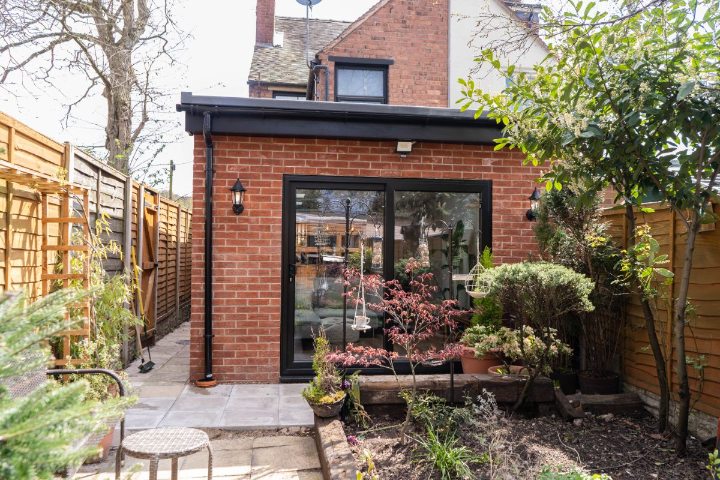
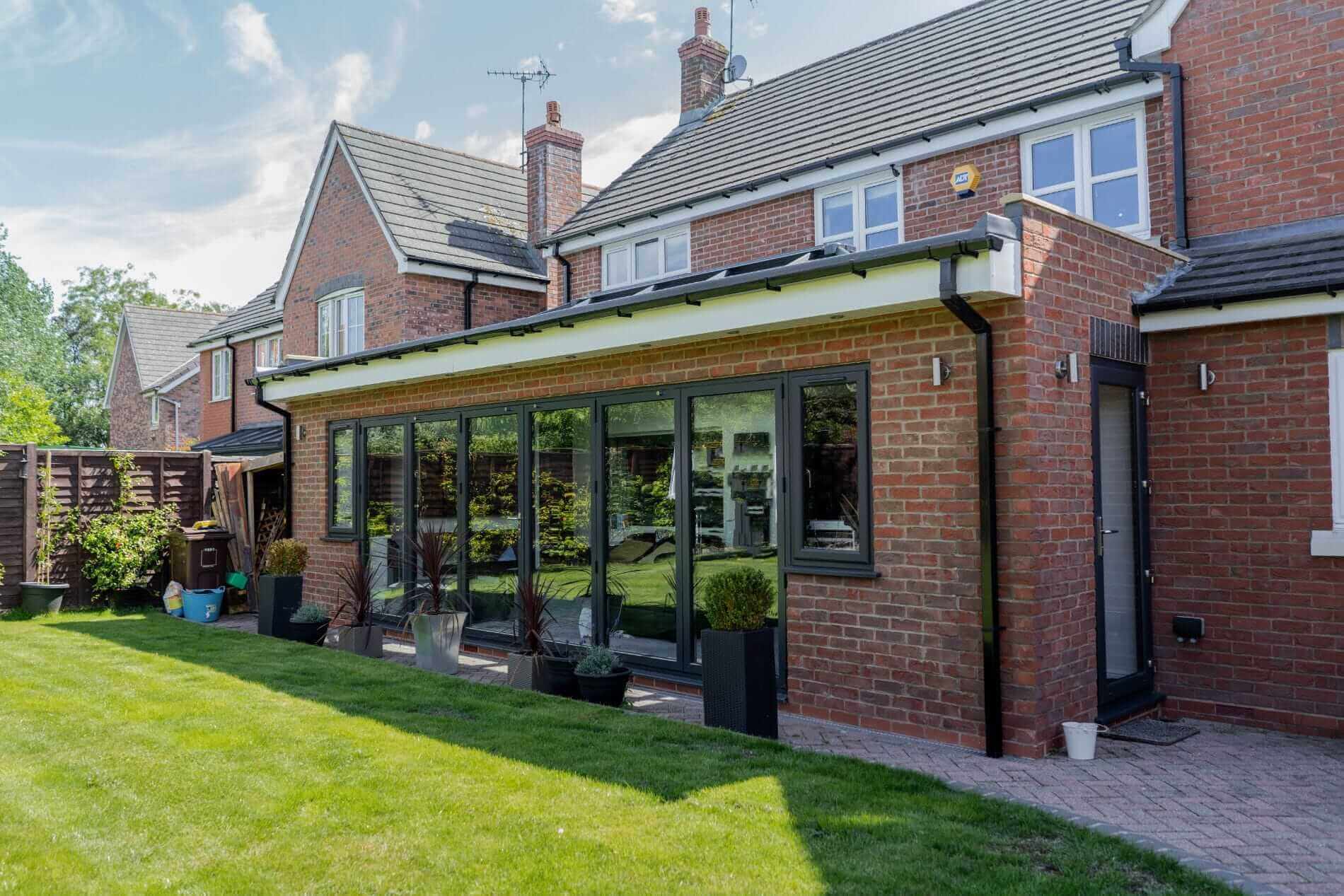
For example, a typical rear extension on a semi in Birmingham might have a flat roof at 2.8m high along the party wall, rising slightly towards the centre with rooflights to bring in extra space and light without breaching the 4m cap.
Distance from boundaries and side extensions
Boundary rules go beyond just height. Here’s what you need to know:
Within 2m of any boundary:
The eaves height must not exceed 3m. This applies to rear and side elevations and often drives design decisions around roof slope and internal ceiling heights.
Side extensions:
- Must be single storey only
- Maximum height of 4m
- Width no more than half the width of the original house
- If they wrap around to the rear, rear-projection limits still apply
Plot coverage:
Total extensions and outbuildings (existing and proposed) must not cover more than 50% of the area of land around the original house. This curtilage rule can catch people out, especially if you already have a garage, shed or previous extensions.
Quick reference: Permitted development limits by house type
| House type | Standard rear depth | Larger home extension depth | Max height (single storey) | Eaves within 2m of boundary |
| Terraced | 3m | 6m (prior approval) | 4m overall | 3m max |
| Semi-detached | 3m | 6m (prior approval) | 4m overall | 3m max |
| Detached | 4m | 8 m (prior approval) | 4m overall | 3m max |
Can I extend to the side under permitted development?
Yes, but the rules are tighter. Side extensions must be single storey, with a maximum height of 4m and a width no greater than half the width of the original building. They can’t extend beyond the principal elevation (the front of your house facing the road) without full planning permission.
If you’re filling in a side return – a popular choice in Victorian and Edwardian terraces across the West Midlands – the extension must respect both the side and rear limits. The result is often an L-shaped type of extension that opens up the ground floor and creates a much more usable kitchen-diner.
What about front extensions and upper storey work?
Front extensions and two-storey rear extensions fall outside the generous permitted development rules that apply to single storey rear work. They’re possible under permitted development, but the limits are much tighter and often impractical.
For front extensions, you’re typically limited to just 3m in depth, and the extension must not be closer to the highway than the existing house. For an upper storey, rear extensions are restricted and often require materials of similar appearance to the original house.
In practice, most homeowners pursuing front extensions or double-storey work will need a full planning application or will find the permitted development rules too restrictive.
What if I’m in a conservation area?
Permitted development rights are more restricted in conservation areas. The generous rear-extension allowances may be reduced or removed entirely, and even small changes can require a full planning application. Always check with your local authority before assuming your project qualifies.
If your property is listed or in a particularly sensitive area, you’ll almost certainly need planning permission and possibly listed building consent too.
Next steps: Check, design and build with confidence
Understanding how far you can extend under permitted development is the first step. But rules are just one part of the puzzle. Good design, compliance with building regulations and working with experienced professionals make all the difference.
At West Midlands Home Improvements, we’ve helped hundreds of homeowners across Birmingham, Solihull, Sutton Coldfield and the wider West Midlands navigate permitted development rules and bring their extension plans to life. We handle everything from initial design and planning compliance to build and final sign-off.
Whether you’re working within standard permitted development limits or pursuing a larger home extension with prior approval, our team will guide you every step of the way.
Ready to start your extension project?
Get in touch with West Midlands Home Improvements today for a free consultation and let’s turn your extra space dreams into reality.