When you’re planning a loft conversion, most of the excitement centres around the new room itself. Will it be a bedroom? A home office? Maybe a playroom for the kids? But there’s one element that often gets overlooked until later in the planning process – the staircase.
Getting your loft staircase design right affects everything. It determines how much usable floor area you’ll have downstairs, how easily you can move between levels, and whether your new space feels like a natural part of your home or an awkward add-on. The wrong choice can eat into valuable living space or create a bottleneck in your hallway.
At West Midlands Home Improvements, we’ve completed dozens of loft conversions across Birmingham and the wider region. We’ve seen every type of property layout imaginable – Victorian terraces with narrow hallways, post-war semis with compact footprints, and modern builds with open-plan ground floors. Through all these projects, one thing’s become clear: there’s no one-size-fits-all answer when it comes to staircases. What works beautifully in a detached house in Solihull might be completely wrong for a terraced home in West Bromwich.
Why Your Loft Conversion Staircase Matters More Than You Think
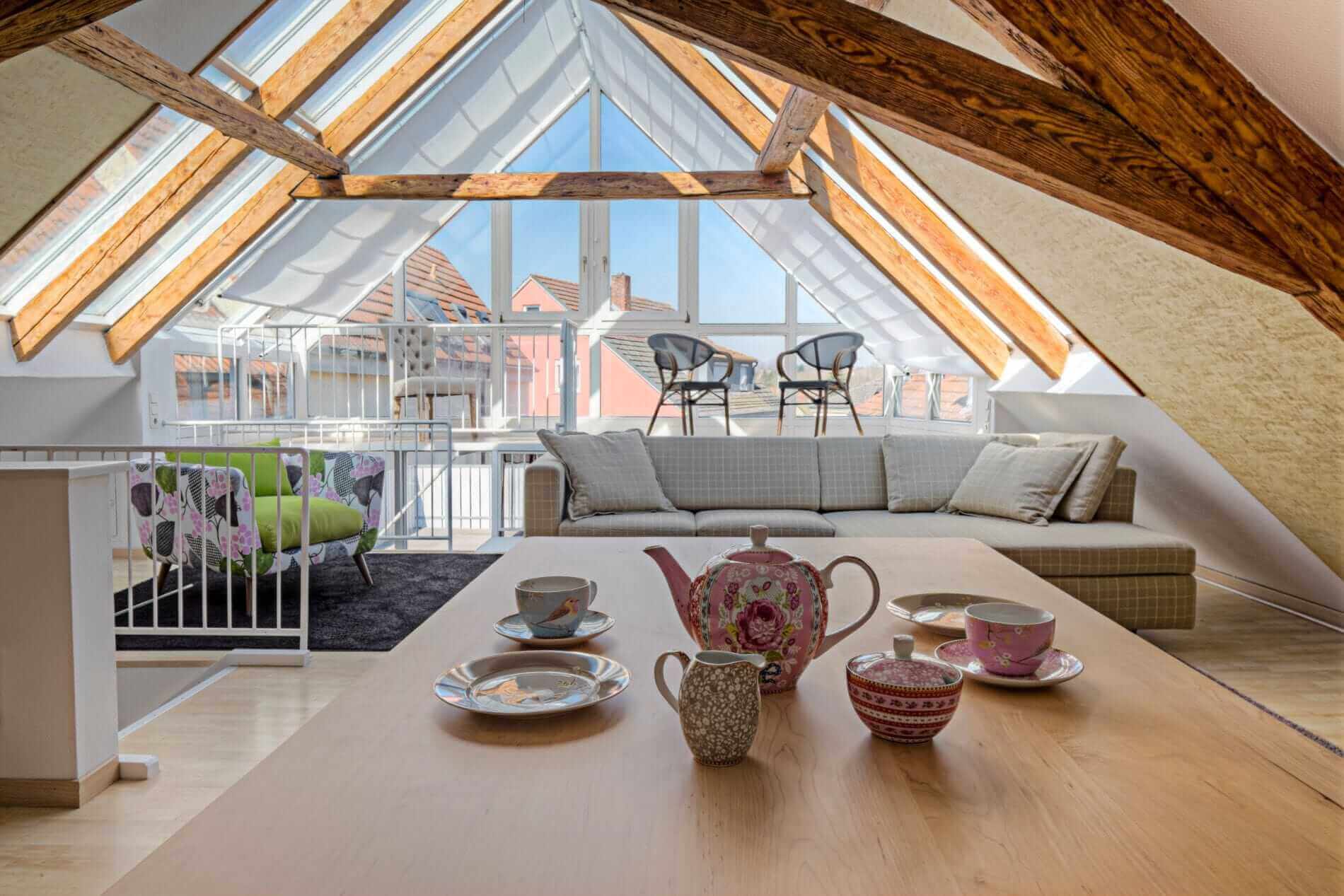
A loft conversion transforms unused roof space into a valuable living area. Whether you’re adding a bedroom to avoid moving house, creating a quiet workspace away from family life, or finally getting that home cinema you’ve always wanted, converting your loft is one of the most cost-effective ways to add space to your home.
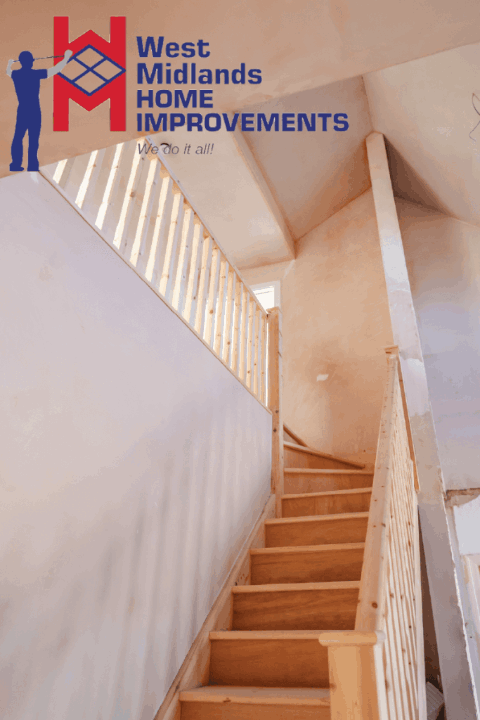
Those pull-down ladders might have been fine when your loft was just for storing Christmas decorations, but they won’t cut it for a living space. You need something safe, comfortable to use multiple times a day, and compliant with UK building regulations.
The staircase is also a bigger deal than people realise because it affects both floors. Upstairs, the position of the staircase opening determines the layout of your new room. Downstairs, it takes up space – sometimes quite a lot of it. This is particularly true in older homes where hallways weren’t designed with loft conversions in mind.
Understanding Your Staircase Options
When it comes to loft stairs, you’ve got three main types to choose from. Each has its own advantages and works better in certain situations.
Straight Staircases
Straight staircases are precisely what they sound like – a single, straight flight of steps going up to your loft. They’re the most common type of staircase in homes. They’re comfortable to use, relatively straightforward to build, and people find them intuitive.
The main advantage of straight staircases is safety and ease of use. There are no turns to navigate, which makes them easier for children, older family members, and anyone carrying things up and down. If you’re planning a loft bedroom, you’ll appreciate this when you’re taking bedding up or moving furniture.
The downside? They need the most space. You’re looking at roughly 3 metres in length, plus landing space at the top and bottom. In a home with a compact hallway, this might not be realistic. They work best when you’ve got a decent-sized landing or hallway.
Winder Staircases
Winder staircases are traditional staircases that turn – usually 90 or 180 degrees – using wedge-shaped steps rather than a flat landing. This is probably the most common practical solution for your specific needs when space is tight.
These stairs take up less space than straight ones because they turn, which means they can often fit into awkward spaces. They’re still relatively easy to use, though the wedge-shaped steps (called winders) need a bit more attention when you’re going up and down.
Winder staircases work well in many homes, particularly Victorian and Edwardian properties, where hallways are often narrow but reasonably long. They give you a good balance between comfort and space efficiency.
Spiral Staircases
A spiral staircase winds around a central pole, creating a compact design that takes up minimal space. When people think about fitting stairs into tight spots, this is usually what comes to mind.
The big advantage of spiral stairs is their small footprint. You can fit one into a space that would never accommodate traditional staircases. For smaller spaces, they can be the difference between a loft conversion being possible or not.
Our Approach to Loft Conversions
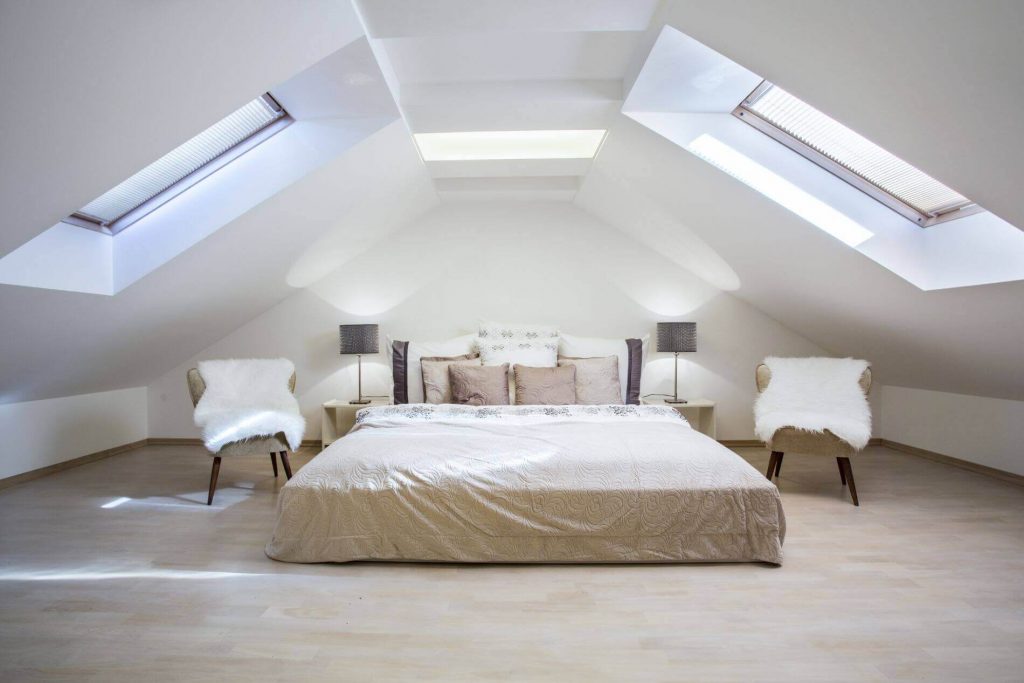
We’ve been helping homeowners across Birmingham and the surrounding areas with loft conversion projects for years now. When you choose us, we spend time understanding how you use your home, what you want from your new loft space, and what matters most to you.
Our team handles everything from initial planning through to design, planning permission, and construction. We work with local building control, understand the particular challenges of West Midlands properties, and we’re on hand to offer expert advice throughout the process.
We’re also conscious that loft conversions are a significant investment. That’s one reason we offer extensive finance options to spread the cost.
Those who sign up for a loft conversion with us in January can get access to our current offer of 26% off.
Choosing the right type of staircase for your loft conversion is about finding an option that works with your home’s layout, suits how your family lives, and gives you the most usable space both upstairs and down.
To discuss your loft conversion and arrange a free, no obligation quote, you can:
- Call us on 0121 726 6730
- Email us at contact@westmidlandshomeimprovements.com
- Use our online contact form
Frequently Asked Questions
What type of staircase is best for a small hallway?
For smaller hallways, winder staircases are usually your best bet. They turn as they rise, which means they need less length than straight stairs. If space is really tight, a spiral staircase might be worth considering.
Do I need planning permission for a loft conversion staircase?
Most loft conversions fall under permitted development and don’t need planning permission. We handle all applications for our customers, so you don’t need to worry about the paperwork.
How much space does a loft staircase typically take up?
This depends on the type. A straight staircase typically needs about 3 metres in length plus landing space. Winder staircases reduce this by turning, so they might fit into a 2.5 metre space. Spiral staircases can fit into as little as 1.5 square metres.