
If your growing family is starting to feel the squeeze at home – with a constant contest to use the dining table for working from home, hobbies, homework and, of course, dining – you’ll know you need more usable space.
The obvious solution is a house move, but moving is notoriously stressful and expensive. Plus, you may already be in a location you love, surrounded by good neighbours, excellent schools, and everything else you could wish for.
So logically, why not just extend your existing house?
While an extension can have a significant upfront cost, this outlay will add to the value of your home in the longer term. Compare that to moving house, which often involves significant non-recoverable costs such as stamp duty, estate agent’s fees, solicitor’s fees and removal costs that can easily exceed £15,000 to £20,000.
When you decide to expand your home, you aren’t just buying extra square footage – you are making a long-term investment in your property’s structural future. Whether the kids need their own space or your home office has outgrown the kitchen table, the goal is to create an addition that provides value for the next 50 to 60 years, avoiding the immense cost and upheaval of moving.
In this blog, we take a look at the options available when it comes to house extension finance, what to consider before committing, and how West Midlands Home Improvements can help make your project a reality.
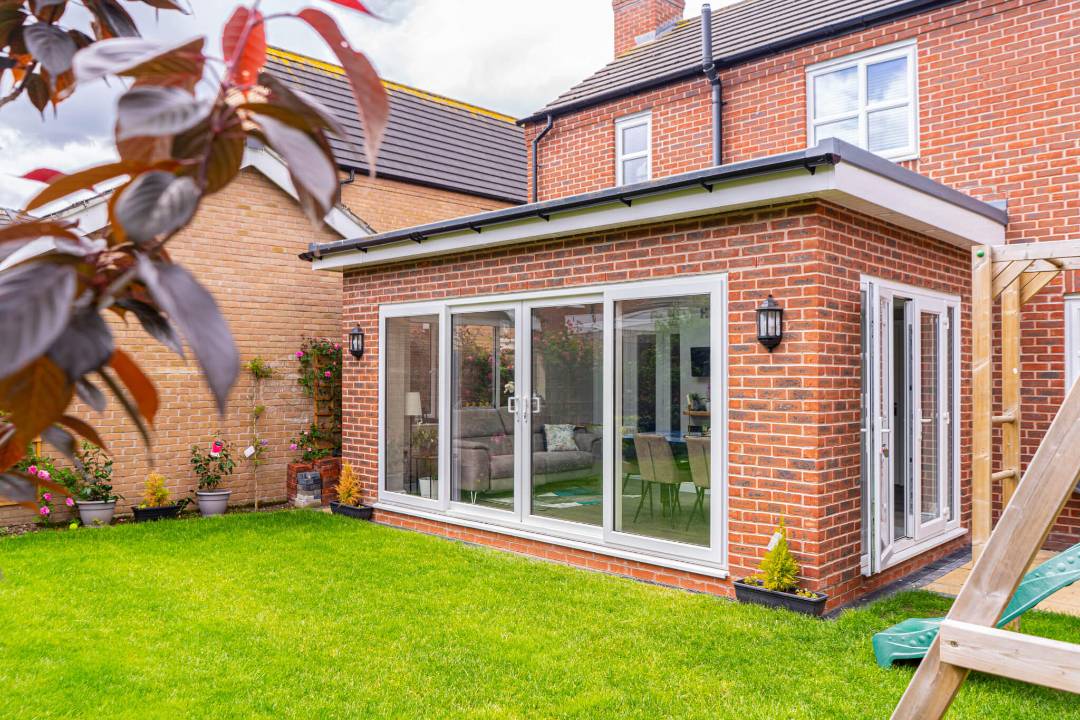
How can I potentially finance a house extension?
There’s no one-size-fits-all answer when it comes to the cost of an extension. A simple garage conversion to gain a home office will require very different house extension finance compared to a full wrap-around two-storey extension.
Whatever you need, however, there will be several funding options available to you.
The most popular are as follows:
Mortgage-based funding (secured)
For large-scale extensions – such as two-storey or wrap-around builds costing £50,000 or more – using your property as security is often the most cost-effective route due to lower interest rates. You can either switch your entire existing mortgage to a new deal or, while staying with your current lender on your current terms, borrow additional funds to cover the build costs.
Home extension loans like these can help you finance the extra living space you need by providing funding through your current mortgage lender, often at the best available rates.
To qualify, lenders typically require proof of income, a good credit score, details of your credit history, the proposed construction plans, and an estimate of costs. You may also need to provide property documentation and meet certain eligibility criteria set by the lender.
Personal loans and credit (unsecured)
For smaller projects like a kitchen extension, porch, or garage conversion – typically costing between £10,000 and £40,000 – unsecured options offer peace of mind and faster access to cash without putting your home at risk as direct collateral.
- Home improvement loans: These are standard personal loans that can be used as a second charge loan. They usually have better interest rates compared to other loans, and your lender will make a lending decision based on your needs and circumstances. However, they still have higher interest rates than mortgages and shorter terms (3–7 years), meaning you pay less interest over the life of the loan.
- 0% interest credit cards: Some cards offer 0% on purchases for up to 20 months. These are best for smaller parts of the project – like appliances or flooring – or for plugging gaps in a budget, but be mindful of hidden fees.
- Developer/supplier finance: Some companies, such as West Midlands Home Improvements, offer “buy now, pay later” or interest-free credit for a set period through a credit broker, giving you flexibility without the need to approach a bank.
Government grants and support
- Warm homes: Local grant: If your extension involves significant energy-efficiency upgrades such as insulation or air source heat pumps, and you meet income criteria, you may qualify for local authority funding.
- Disabled facilities grants: If the extension is required to adapt a home for a disabled person – for example, a downstairs wet room or bedroom – you can apply for a grant of up to £30,000 in England. If you feel this is something that would benefit you, you can apply directly through the government’s website.
- Support for mortgage interest (SMI): If you are on certain benefits, this government loan can help pay interest on loans taken out for essential home repairs.
- Equity release (for those aged 55+): If you own your home outright or have significant equity and are over 55, a Lifetime Mortgage allows you to release a tax-free lump sum to fund an extension. The loan, along with any repayments, is usually only repaid when you pass away or move into long-term care.

Things to consider when looking to fund a house extension project
Before committing to any financing route, it is essential to plan your budget carefully based on your personal circumstances. Budgeting for a home extension requires more than just a “cost per square metre” estimate – and to avoid the common pitfall of a project stalling halfway through, you need to account for professional fees, taxes, and a robust safety net.
The “rule of three” cost breakdown
A common mistake is spending the entire budget on the “shell.” Instead, divide your total funds into three distinct areas, including considerations for a second charge mortgage if needed:
- 60% – Construction and labour: The foundations, walls, roof, and structural work.
- 25% – Fittings and finishes: Windows, flooring, kitchen units, lighting, and decoration.
- 15% – Professional fees and admin: Architects, structural engineers, planning application fees, and building control.
Avoiding common financial pitfalls
When arranging finance for a house extension or renovation project, be mindful of these frequently made mistakes:
- Underestimating total costs: Always factor in a contingency buffer for unexpected expenses that arise during the build.
- Overlooking the impact on your current mortgage terms: Borrowing additional funds or remortgaging can affect your existing deal, so check the implications before proceeding.
- Starting the build before securing all necessary funds: Having confirmed, accessible finance in place before work begins protects you from costly delays.
- Not seeking professional financial advice: A qualified adviser can help you compare options and choose the most suitable financing route for your specific situation.
- Failing to check eligibility for specific extension loans or grants: You may qualify for support you weren’t aware of, so it is always worth investigating before committing to a particular product.
Considering finance? What can be included when taking out house extension finance?
House extension finance can be used to cover a wide range of costs associated with expanding and improving your home. This includes:
- Construction expenses – foundations, walls, roofing, and all structural work.
- Design and professional fees – architects, structural engineers, and project management.
- Planning and permits – planning application fees and building control costs.
- Fittings and finishes – windows, doors, flooring, kitchen units, lighting, and decoration.
- Interior furnishings – completing your new space so it is ready to use from day one.
Securing appropriate financing ensures that you can create the additional space you need while managing your budget effectively throughout the entire project, from initial design through to final completion.
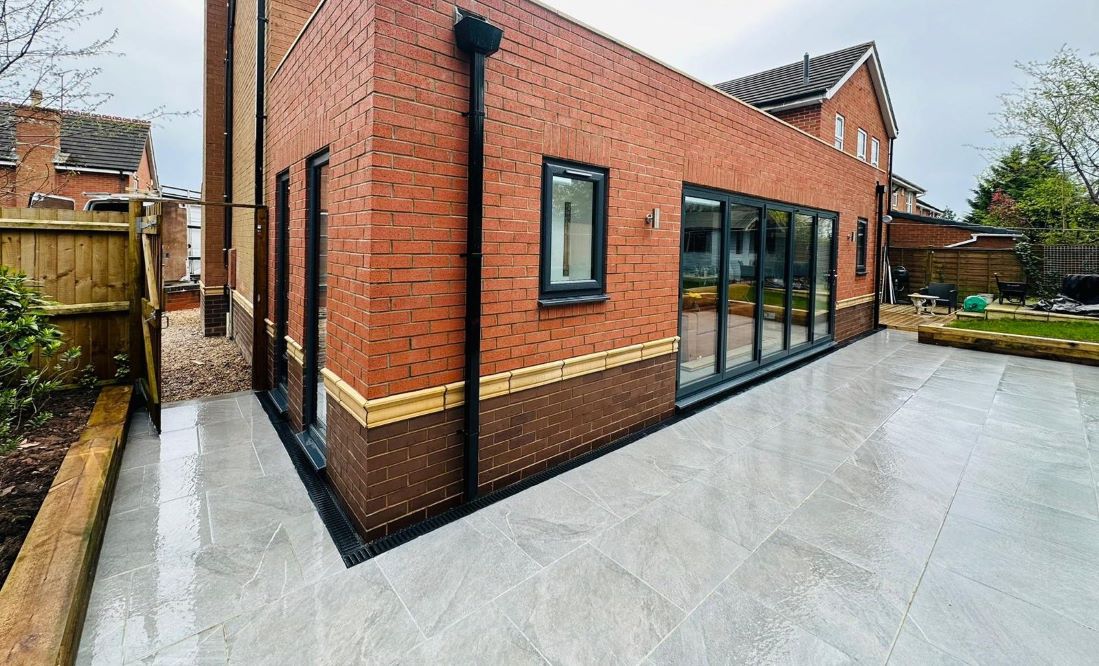
How West Midlands Home Improvements can help with financing your project
West Midlands Home Improvements can support you in financing your project with flexible, FCA-regulated options designed to make your dream home affordable.
As a Financial Conduct Authority (FCA) registered credit broker (FRN 928093), we offer responsible finance solutions via a panel of lenders, giving you peace of mind that your finance is being arranged by a firm meeting strict UK financial standards.
We provide a range of options – including interest-free credit up to 3 years, buy now pay later, and longer-term borrowing – helping you spread the cost of extensions, refurbishment, or major renovation.
Why FCA registration matters:
- Stronger consumer protections: Working with an FCA registered broker means finance is arranged in line with UK rules that protect you, including fair treatment and transparent terms.
- Access to regulated products: FCA oversight helps ensure the lenders we work with are meeting required standards, giving you added confidence that your credit arrangements are properly vetted and supervised.
With a low deposit, unsecured loans not tied to your home, and quick decisions, we aim to make financing straightforward and tailored to your needs.
We’re always happy to discuss the financial options available to you and would recommend doing this at the very start of your project. By understanding your budget early on, we can ensure your plans are designed and tailored accordingly, helping you achieve the best possible outcome without surprises.
Please don’t hesitate to give us a call on 0121 726 6730 or alternatively complete the enquiry form on our website and a member of our team will be in touch shortly.