If you’re thinking about converting your loft, one of the first decisions you’ll face is whether to go for a dormer or a Velux conversion. It’s a question we get asked almost daily here at West Midlands Home Improvements, and it’s not always straightforward to answer.
Both options will transform your unused roof space into a valuable living area. Both can give you that extra bedroom, home office, or playroom you’ve been needing. But they go about it in completely different ways.
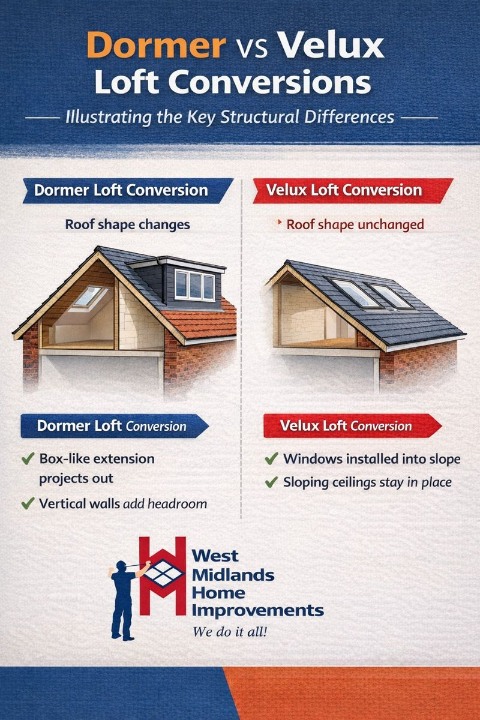
The difference comes down to whether you change the shape of your existing roof or work within it. A dormer sticks out from the roof slope and creates a box-like extension with vertical walls. A Velux conversion (sometimes called a rooflight conversion) keeps your roof line as it is and adds windows into the slope. Simple enough in theory, but the implications for cost, space, planning, and what your finished loft will actually be like to use are significant.
We’ve completed both types across Birmingham and the wider West Midlands. This guide will walk you through the key differences between these two approaches. We’ll explain what each one involves, whether you’ll need planning permission, and how much usable space you’ll actually end up with. By the end, you should have a clearer idea of which type of conversion makes sense for your home.
Why Loft Conversions Are So Popular Right Now
Loft conversions have become one of the most common home improvements across the West Midlands, and it’s easy to see why. House prices make moving expensive and stressful, but most of us still need more space as families grow or working from home becomes permanent.
Converting your loft gives you that additional space without the hassle of moving house. You’re not changing neighbourhoods, taking kids out of schools, or spending months house-hunting. You’re simply making better use of what you already have.
There’s also the financial side. A well-done loft conversion typically adds to your property value, and you don’t have the expense of moving. You’re creating an extra bedroom or office, which makes your home more appealing to future buyers while you get to enjoy the extra space now.
So, with that in mind, let’s look at your two main options for transforming that loft space.
Dormer Loft Conversions
A dormer loft conversion involves building an extension that projects out from your existing roof structure. Instead of working within the sloping roof you’ve already got, you’re adding a new structure with vertical walls and its own smaller roof.
What’s Involved
The most common type is a rear dormer, which extends across most or all of the back of your house. The sloping roof at the rear gets replaced with a vertical wall and a flat or slightly pitched roof. This creates a box-like space that dramatically increases head height and usable floor space. These structural changes are more involved than a Velux conversion.
The Benefits
The big advantage of a dormer conversion is floor area. Those vertical walls mean you can stand upright to the edge of the room. You’re not losing space to sloping ceilings, which makes a massive difference to how usable the new space feels and what furniture you can fit in.
If your roof space doesn’t have much head height to begin with, a dormer is often the only way to create a properly usable room. Dormers also give you more flexibility with layout. You’ve got proper vertical walls to work with, which makes it easier to position beds, wardrobes, desks, and everything else you need in a functioning room.
Despite the changes, a rear dormer loft conversion usually falls under permitted development rights, meaning you don’t need planning permission. However, there are rules about size, and these don’t apply if you live in a conservation area, a listed building, or a flat.
Velux Loft Conversions
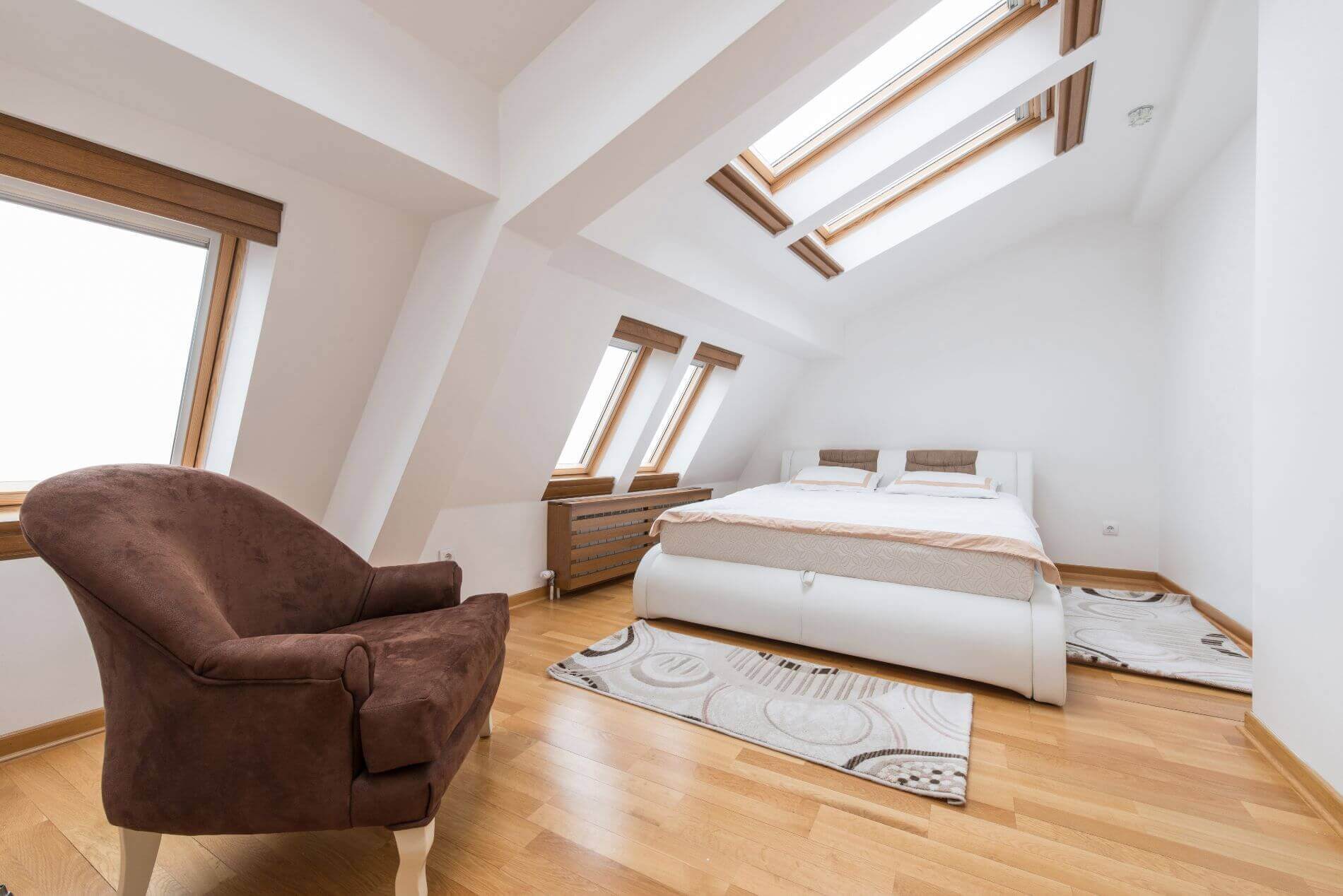
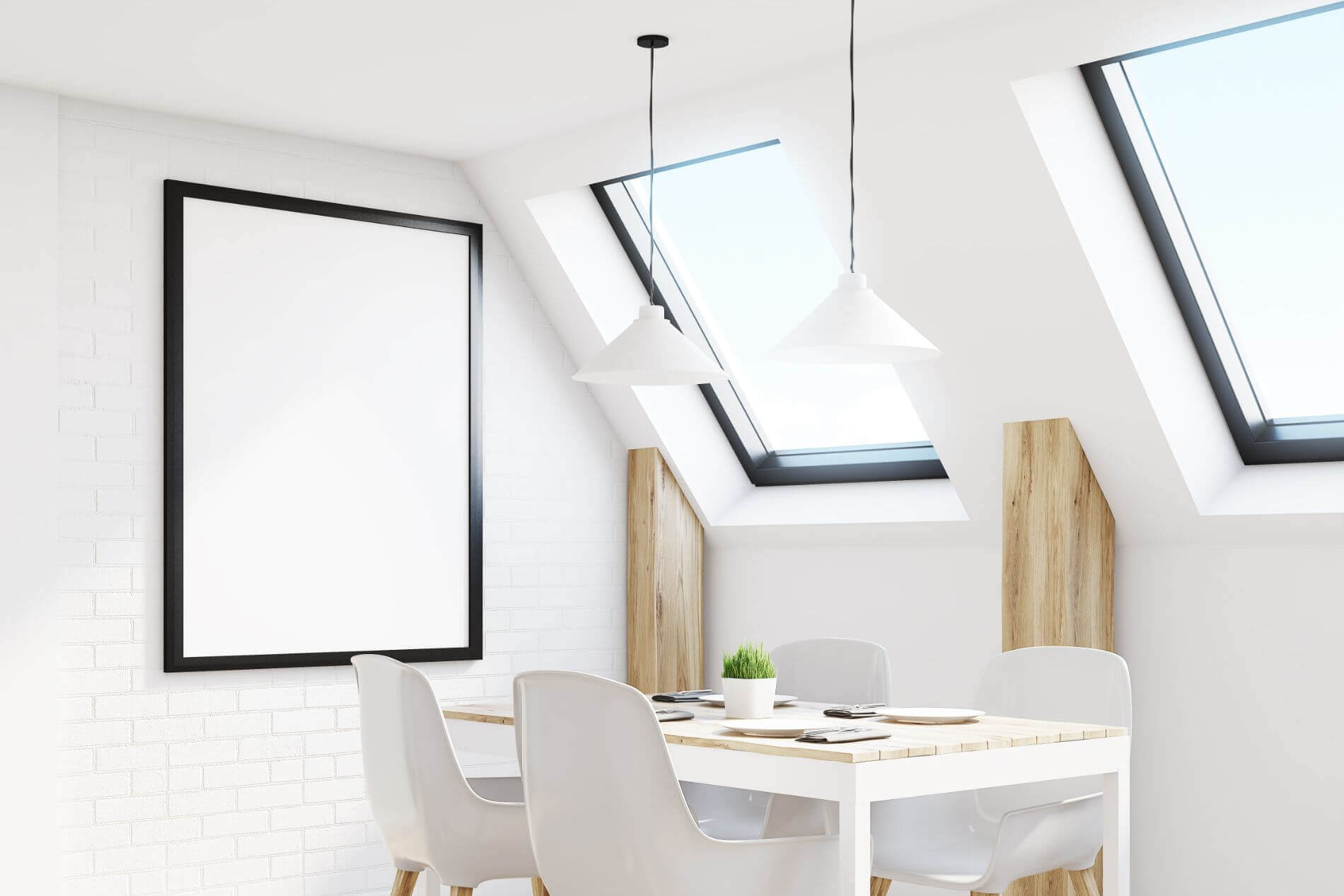
A Velux conversion (named after the popular window brand) works within your existing roof structure. Instead of changing the shape of your roof, you’re strengthening it where needed and adding windows to the slopes.
What’s Involved
This type of loft conversion involves minimal structural alterations. The main work is adding proper stairs, reinforcing the floor, installing roof windows for natural light, and finishing the interior with insulation and plasterboard.
Because you’re not making significant changes to the roof itself, it’s less invasive. There’s minimal disruption to the exterior of your home, and the building work is generally quicker than a dormer conversion.
The Benefits
The most apparent advantage is time and cost. Velux conversions are the most affordable type of conversion because there’s less construction work. If budget is tight, this might be the option that makes your specific project financially viable.
There’s also something to be said for keeping your home’s exterior essentially unchanged. Some people prefer not to alter the roof line, especially on period properties. Velux windows sit flush with the roof, so the changes are much less obvious from the street.
Velux loft conversions almost always fall under permitted development rights. As long as the windows don’t project more than 150mm from the roof slope, and you meet the other standard criteria, you won’t need planning permission.
You still need to meet building regulations, just like any loft conversion. But the process is generally more straightforward because you’re not making major structural changes to the roof structure.
Velux conversions work brilliantly when you’ve got decent existing height and pitch in your roof space. They’re ideal for creating a home office, study, or guest bedroom where you don’t need masses of storage or furniture.
They’re also excellent if you’re in a conservation area or have a listed building where changing the roof line would be difficult or impossible to get approved.
Making Your Decision
Choosing between a dormer or a Velux loft conversion comes down to several key factors: your budget, how much space you need, what your existing roof is like, and whether there are any planning restrictions on your property.
If you need to maximise usable floor space and you’ve got the budget for it, a dormer is usually the better choice. If you want a cost-effective conversion and your existing roof has decent height, a Velux conversion could give you everything you need while saving money.
And if you’ve been thinking about this for a while, now might be a good time to act. We’re currently offering 26% off loft conversion projects for contracts signed before the end of January.
To discuss your options or arrange a free consultation, give us a call on 0121 726 6730, email us at contact@westmidlandshomeimprovements.com, or use our online contact form.
Frequently Asked Questions
Which adds more value to my property – a dormer or Velux conversion?
Both types will increase your property’s value, but a dormer typically adds more because it creates greater usable space. That said, a well-executed Velux conversion in a home with good existing roof height can add value too.
How long does each type of conversion take?
A Velux conversion is generally quicker because there are fewer structural alterations involved.
Can I add a dormer if I’m in a conservation area?
It’s more complicated but not impossible. Permitted development rights are often restricted in conservation areas, which means you’d likely need planning permission from your local council. They’ll want to make sure any changes fit with the character of the area. A Velux conversion is usually easier to get approved in these situations because it doesn’t change the roof line.